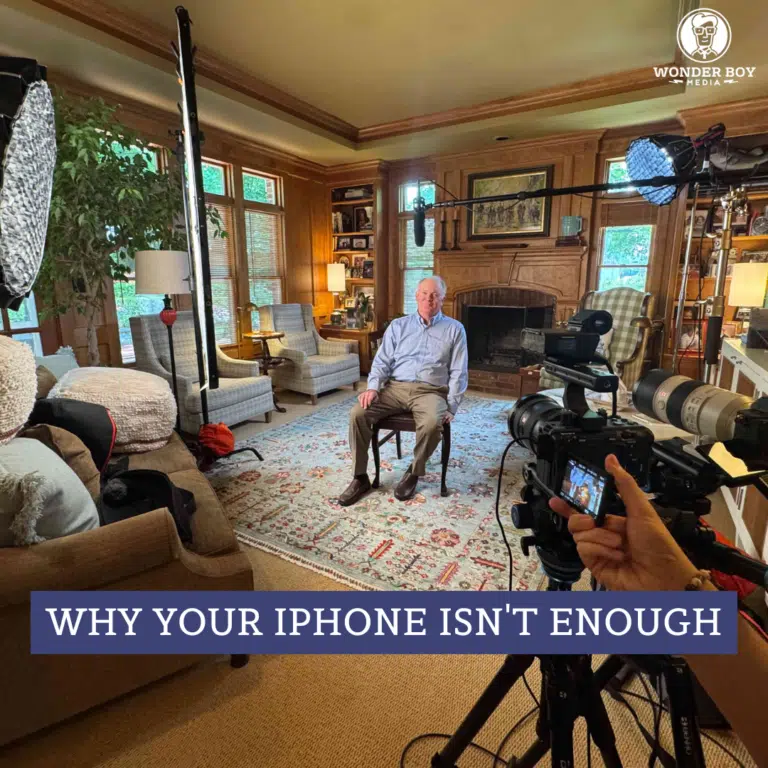
Let’s get something out of the way right at the start. The camera in your pocket is genuinely impressive. Shoot in decent light, hold it steady, and you’ll get footage that would have required thousands of dollars of equipment not that long ago. Nobody at Wonder Boy Media is going to tell you otherwise.
But here’s what we see when a client comes to us after trying to handle their own video production first: bad framing, unflattering angles, harsh lighting, and audio that’s competing with whatever is happening in the room. Those are the technical problems, and they’re easy enough to spot. What’s harder to put into words, but just as real, is what’s missing underneath all of it.
The emotional connection isn’t there. And that’s the whole point of the video in the first place.
What Professional Video Is Actually Trying to Do
Every video Wonder Boy produces has a specific job. Inspire someone to join a team. Move a donor to give. Convince a buyer they’ve found the right product. Help a community trust a doctor. That job requires more than clean footage. It requires the kind of deliberate, practiced craft that makes people feel something without them ever stopping to think about why.
There’s a NICU doctor we filmed a few years back. He was beloved in his community. Everyone knew him, trusted him, felt safe with him. During his interview, talking about his work with premature babies, he started to cry on camera. It was completely unscripted. It was also the most powerful moment in the entire video. People who watched it didn’t just respect him more. They loved him more.
That moment didn’t happen because someone pointed a phone at him and pressed record. It happened because the environment was right, the questions drew something real out of him, and the camera operator knew to stay close and let it breathe. That’s not a technical skill. It’s a human one, developed over years of paying attention on shoots.
The Shot a Phone Misses
Think about a tight shot of someone’s face as they tear up talking about something they care deeply about. That moment disappears if the camera is a static phone on a tripod across the room. You have to be close. You have to be ready. You have to recognize that this is the shot worth waiting for, and then you have to know how to hold it without making the subject feel like they’re being stared at.
Framing decisions like that work on the viewer without them ever noticing. That’s the point. When it’s done right, the audience isn’t thinking about how the video was made. They’re just feeling something. When it’s done wrong, or when it’s done with a phone on a tripod by someone who isn’t sure what they’re looking for, the feeling never shows up at all.
The Lighting Problem Nobody Talks About
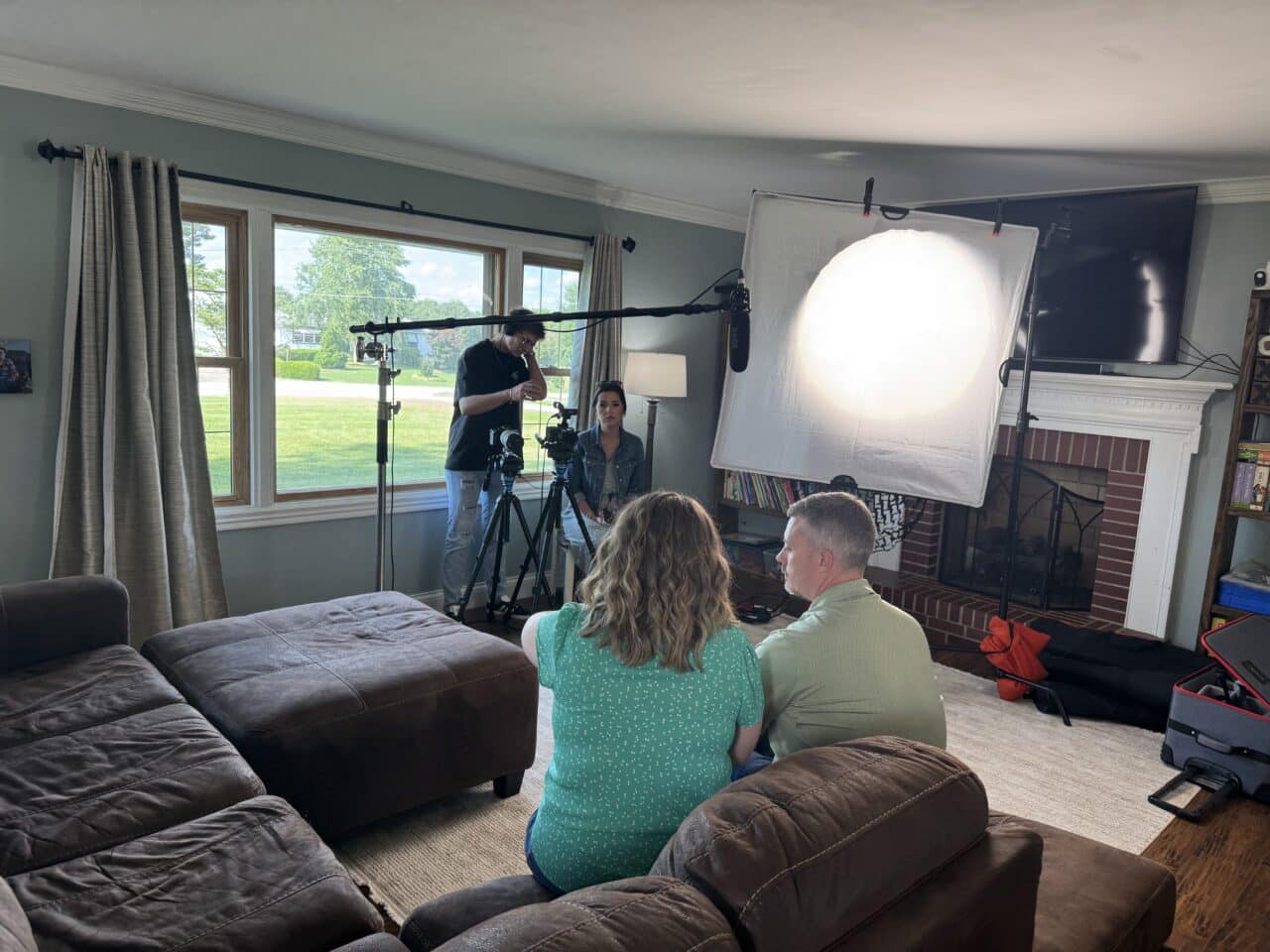
Of everything that separates professional video from DIY footage, lighting is the most underrated. It’s also the hardest thing to fake.
A lot of what Wonder Boy shoots right now uses book lighting. It’s a large, soft source that wraps around the subject evenly. The setup positions the light on one side of the subject’s face, then the camera shoots from the shadow side. The result is subtle: contrast, depth, a quiet sense of dimension that makes the person on screen feel present rather than flat. Add a hair light behind the subject and you get separation from the background, a little definition around the edges, and a finished look that reads as professional without anyone in the audience being able to say exactly why.
When clients are on set with us, we walk them through this in real time. We’ll have them look at the monitor and then turn the key light off. Then back on. Then off again. Every single time, the reaction is the same. They see it immediately. The difference is not subtle once you’re looking for it, and the only reason most people haven’t seen it before is that nobody ever showed them.
Compare that experience to the most common DIY setup: subject sitting in front of a window, phone pointed at them. The window blows out. The face goes dark. The shadows fall where they shouldn’t. It’s not that the person looks bad exactly. It’s that the light is working against them when it should be working for them. That gap, between light that flatters and light that distracts, is one of the things clients almost never notice until they see the difference side by side. Then they can’t unsee it.
What Happens When Clients Try It Themselves
This plays out more than you’d expect. A client decides partway through pre-production that they’ll handle the B-roll themselves. Save some budget, keep things moving. It sounds reasonable. They have a phone. They’ve watched enough video content to have a general sense of what looks good.
It usually falls apart for the same few reasons. They don’t have the time. They get on location and aren’t sure what to capture. They try to set something up and it doesn’t look the way they pictured it. None of that is a failure on their part. This is a skill set built over years, and they have an actual business to run. The DIY detour costs them more time than it saves, and the footage usually doesn’t make the cut anyway.
The clients who get the most out of working with Wonder Boy are the ones who understood that dynamic from the beginning. They’re not outsourcing because they can’t figure it out. They’re outsourcing because they’ve figured out that their time is better spent on the things only they can do.
Play Your Strengths
Here’s how Wonder Boy puts it to new clients who have never worked with a production company before: play your strengths.
You’re good at selling, or managing, or building something that people need. That’s what you’ve spent years getting good at. We’ve spent years getting good at video. The framing, the lighting, the interview technique, the edit that makes someone feel something they didn’t expect to feel. When both sides play to their strengths, the outcome is almost always better than either side could have produced alone.
That’s not a sales line. It’s just how it works. The clients who come in knowing what they want to say, and trusting Wonder Boy to figure out how to say it on screen, are the ones who end up with videos they’re genuinely proud to put their name on.
The Bottom Line
Your iPhone is a great tool. The cameras Wonder Boy shoots on are great tools too. The difference isn’t really about the equipment. It’s about the years of knowing what to do with it: where to put the camera, how to light the subject, when to stay close, and how to create the conditions where something real can happen on screen.
That’s what professional video production actually is. And that’s what a phone, no matter how good the camera, isn’t built to replace.