If you have tried to get a straight answer on what video production costs, you already know how frustrating it is. Most production companies either dodge the question entirely or give you a range so wide it tells you nothing. “It depends” is technically true and completely unhelpful.
So here is what Wonder Boy Media is going to do instead: give you real numbers, explain what drives them up or down, and help you figure out where your project actually falls before you ever pick up the phone.
The Honest Range
Corporate video projects at Wonder Boy typically run anywhere from $3,000 to $60,000. That is a wide range, and it is wide for a reason. A single-location brand highlight for a local business and a multi-day production with interviews, multiple locations, animation, and a full deliverable package are fundamentally different projects. Pricing them the same way would make no sense.
Most clients who reach out for the first time land somewhere in the middle of that range. The $3,000 end is real and it produces something useful. The $60,000 end is for clients with complex needs, significant scope, and a clear understanding of what they are investing in. Both are legitimate. Neither is padding.
The number that matters most is not the total budget. It is whether the budget matches what the project actually requires to work. A $3,000 video shot with the right expectations is a great outcome. A $3,000 video shot with $20,000 expectations is a frustrating one for everyone involved.
What Drives the Cost Up
When a project gets more expensive, it is almost always because of one or more of the following:
Number of shoot days. A single shoot day keeps costs contained. Each additional day adds crew time, equipment time, and coordination. Some projects genuinely need two or three days to capture everything required. Others can be planned tightly enough to get it done in one.
Number of locations. Shooting in one place is efficient. Moving to two or three locations means breaking down and rebuilding the set, additional travel time, and sometimes location fees. Each location adds time and time adds cost.
Animation. Motion graphics and animation are among the most time-intensive things in post-production. If your project requires animated explainers, custom graphics, or title sequences, budget accordingly. It is skilled work that takes significantly longer than a standard edit.
Pre-production scope. Scripting, storyboarding, and extensive planning before the shoot are real labor hours. For some projects, especially ones with a lot of spoken content or a complex narrative, thorough pre-production is what makes the whole thing work. It is never wasted but it does add to the front end of the budget.
Travel. Shooting outside of the Owensboro area means travel time, mileage, and sometimes accommodations. Wonder Boy works nationally and travels regularly, but travel costs are real and get factored in.
What Clients Almost Always Underestimate
Here is the one that surprises people most: editing takes a long time.
Most clients never see the edit suite. They hand over the footage, or watch the shoot happen, and then wait for the finished product to arrive. What happens in between is invisible to them, which makes it easy to underestimate. A single corporate video with interviews, B-roll, music, color correction, audio mastering, and graphics can take anywhere from 20 to 60 hours of editing time depending on the complexity.
Because editing is typically included in the project price rather than broken out as a line item, clients rarely think about it as a cost. But it is often the largest single labor investment in the entire project. When a client asks why the turnaround takes two to three weeks, this is the answer.
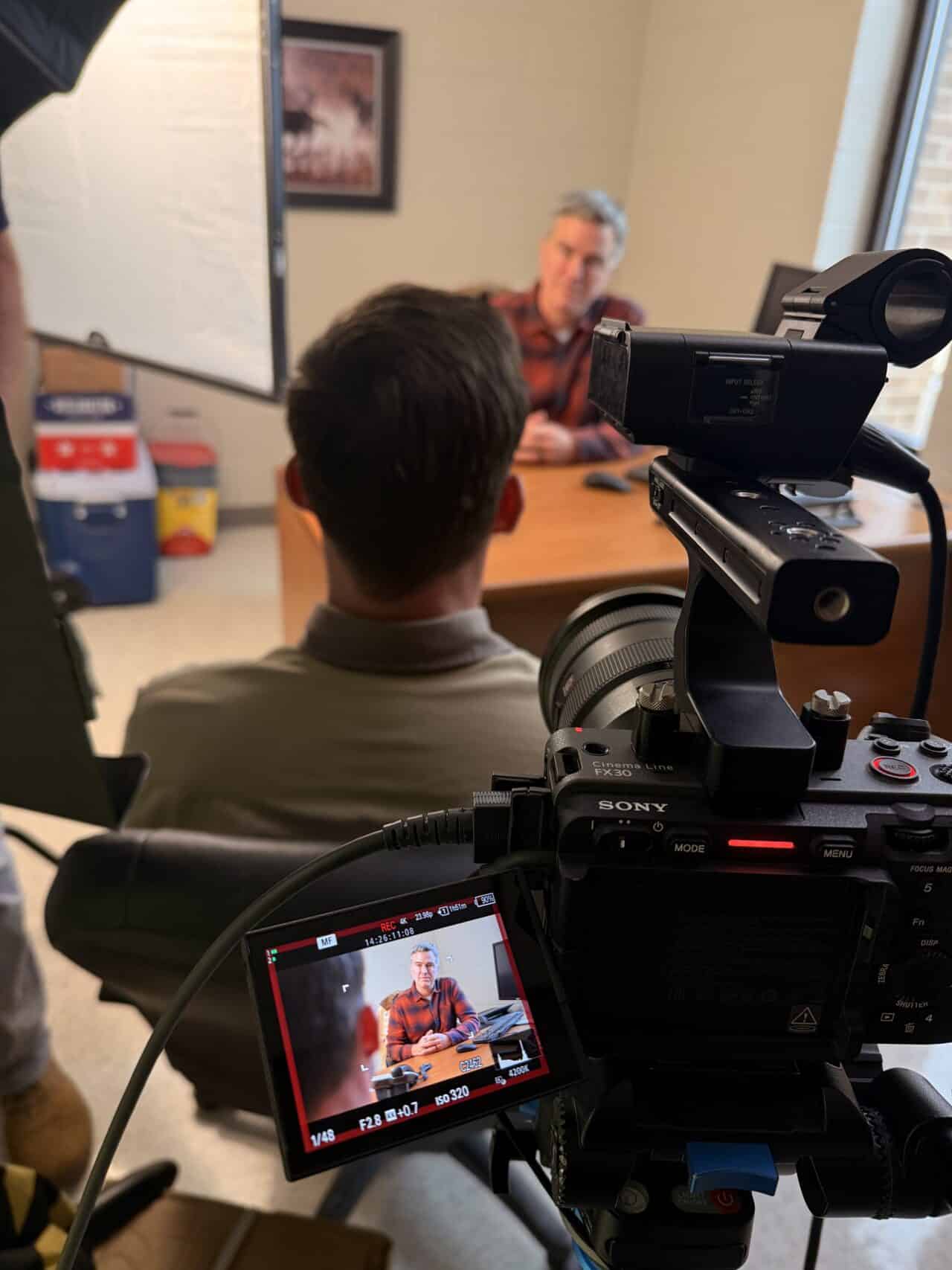
The other thing clients underestimate is what a professional setup actually involves. There is a common assumption that showing up with a camera is the hard part. It is not. The lighting, the audio, the interview setup, the monitoring equipment, the preparation that goes into making someone look and sound their best on camera: that is the work. A camera alone does not produce professional video. The full setup does.
The One Thing Worth Protecting in Your Budget
If a client ever pushes back on production costs, the first thing they reach for is usually the lighting and audio setup. It feels like an obvious place to trim. The camera is still there. The interview is still happening. How much can the lights really matter?
They matter more than almost anything else in the production. Lighting is what makes the difference between an interview that looks professional and one that looks like it was filmed in a break room. Audio is what keeps viewers watching past the first ten seconds. These are not luxury additions to a video shoot. They are the foundation of a result that reflects well on the client’s brand.
Wonder Boy has never had a client watch a properly lit, well-recorded interview and wish they had skipped the setup. The regret always runs the other direction.
What Each Budget Level Actually Gets You
Here is the clearest way to think about it:
| $2,000 Project | $20,000 Project |
|---|---|
| 1 to 2 person crew, handheld camera | Full crew with dedicated camera operator and director |
| No interview setup | Full interview setup with lighting and audio |
| No professional lighting or audio | Multiple locations, travel included |
| Single shoot day, single location | High quality audio |
| 1 long form video | Multiple shoot days as needed |
| 2 short form social cuts | 1 to 3 long form videos |
| Standard revision round | 5 to 7 short form social cuts |
| Multiple revision rounds |
Neither of these is a better or worse choice in absolute terms. They are different tools for different situations. A local business launching a new service might get exactly what they need from a $2,000 highlight video. A regional company rebranding and needing a full library of content for their website, sales team, and social channels is going to need the infrastructure that comes with a larger budget.
The question is never “how little can I spend on video.” The question is “what does this video need to do, and what does it take to do that well.”
How to Know Where Your Project Falls
Before you reach out to any production company, including Wonder Boy, it helps to have answers to a few basic questions. What is the video for and where will it live? How many people need to be interviewed or featured? Does the project require multiple locations? Is there existing footage to work with or does everything need to be shot from scratch? Is animation or motion graphics part of the vision?
The more clearly you can answer those questions, the more accurately a production company can quote you. Vague briefs produce vague quotes. Specific briefs produce specific quotes and better projects.
If you are not sure where your project falls, Wonder Boy is happy to talk through it before any numbers are on the table. The goal of that conversation is always to figure out what the video actually needs to work, and then build a scope that fits both the creative vision and the real-world budget.
That is how you get a video you are proud to put your name on, at a number that makes sense for where your business is right now.