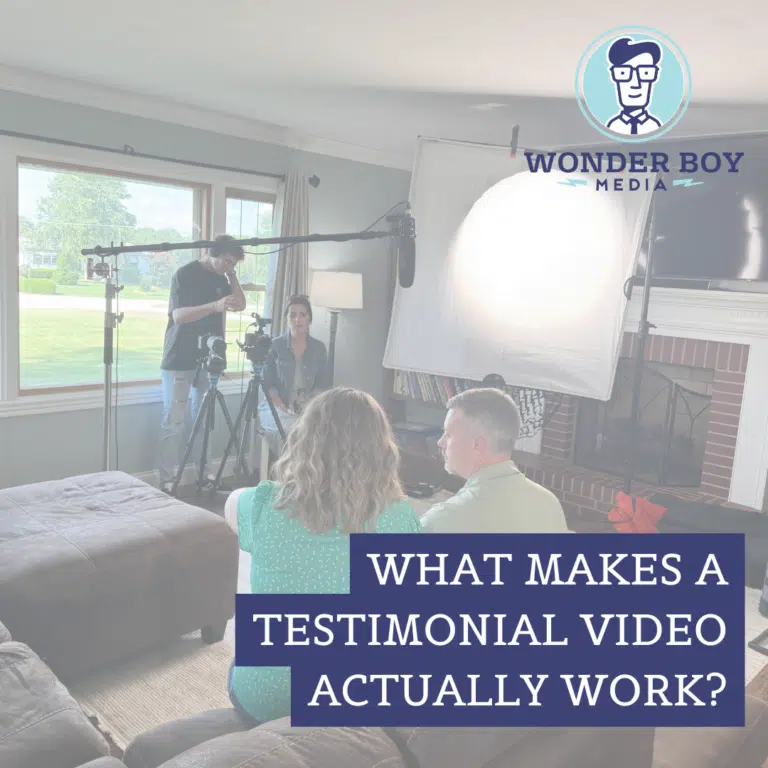
Spend enough time watching corporate testimonial videos and a pattern emerges pretty quickly. Someone sits in front of a camera, reads what sounds like a prepared statement about how great the product is, smiles at the right moments, and wraps up with something like “I would absolutely recommend them to anyone.” The video ends. You feel nothing.
Most testimonial videos fail not because of bad lighting or poor audio. They fail because the person on screen isn’t really saying anything. They’re performing a testimonial rather than giving one. And the difference between those two things is everything.
Wonder Boy has produced a lot of testimonial videos over the years, across industries, budgets, and subjects. Here is what actually makes them work.
It Starts with the Right Person
The single most common mistake in testimonial video production is choosing the wrong subject. Most organizations have someone who is a genuine champion of what they do. That person is usually easy to identify because they are the one who talks about the organization with real enthusiasm, who shares stories without being asked, who gets a little animated when the topic comes up. That is your subject.
The mistake is settling for whoever is available or whoever seems most polished or professional. A polished subject who is only somewhat enthusiastic will deliver a polished, forgettable testimonial every time. A less polished subject who genuinely believes in what they’re talking about will deliver something that moves people, even if they stumble over a word or two.
The passion is the point. Everything else is secondary.
Pre-Production Is Where the Real Work Happens
A great testimonial video is not improvised on shoot day. By the time the camera rolls, the subject should already feel prepared, comfortable, and clear on what they want to say. That preparation happens in pre-production, and it is the most important part of the process.
Wonder Boy sends subjects a set of general questions ahead of time so they can think through their answers before the shoot. This is not about scripting them. It is about removing the anxiety of being caught off guard. When someone already has a sense of what they want to communicate, they arrive at the shoot relaxed rather than nervous.
Then on shoot day, before the camera ever rolls, the framing is simple: this is just a conversation. Look at the interviewer, not the camera. Ignore the lights and the equipment. Just talk. It sounds obvious but it makes a real difference. Most people have never been on a video shoot before. Being told explicitly that they do not have to perform takes a visible weight off them.
A few jokes help too. Not forced ones. Just enough to break the tension and get someone laughing before the first question. The version of a person you see after they’ve laughed for the first time is almost always the version you want on camera.
The Spinoff Question
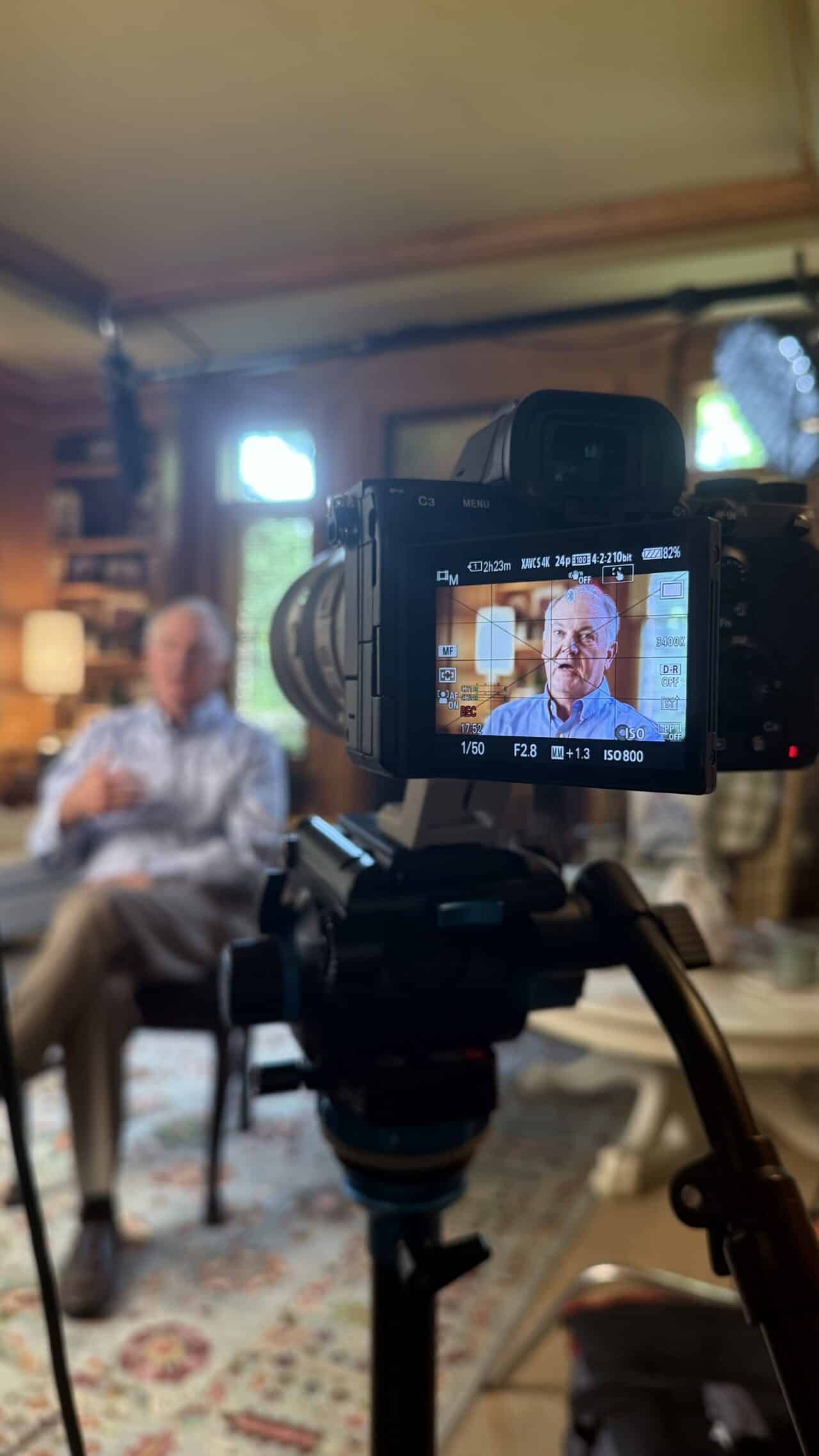
Here is something most people outside of video production never think about: the best answer in a testimonial interview is almost never the answer to the question you planned to ask. It is the answer to the question that question led to.
Wonder Boy starts with the general questions, the ones the subject has already seen and thought about. Those answers serve a purpose. They get the subject talking, get them comfortable, and almost always reveal a thread worth pulling. That’s when the real interview begins.
The follow-up question, the one that comes directly from something the subject just said and that they were not expecting, is where the genuine answers live. It catches people in the middle of actually thinking rather than reciting. The guard comes down. The real story comes out.
Two questions that almost always produce something genuine regardless of the subject or the organization:
“What was life before this, and how does that compare to where you are now?”
This question works because it creates contrast. Before and after is a story structure that people naturally understand and respond to. It also asks for something personal, a lived experience, rather than an opinion about a product or service.
“Tell me about the journey you had to take to get to where you are now.”
This one opens the door to everything. Journey implies struggle, growth, change. Nobody’s journey is boring to them. And when someone starts talking about their own journey, they almost always forget they’re on camera.
When Something Real Happens
A few years ago, Wonder Boy filmed a NICU doctor who was beloved in his community. Everyone knew him. Everyone trusted him. During his interview, talking about his work with premature babies and what it meant to him, he started to cry on camera. It was completely unscripted. Nobody asked him to do it. It just happened because the questions created the space for it.
That moment did not make people feel sorry for him. It made people love him more. It made him more real, more human, more trustworthy. It was the best thing in the video and it could not have been planned.
More recently, Wonder Boy filmed a group of long-time employees at EM Ford for their 100th anniversary. These were women who had spent decades at the company and had stories going back further than most people in the room could remember. They laughed. They cried. They interrupted each other and finished each other’s sentences. What came out of those interviews was not just a collection of testimonials. It was a portrait of a culture, of what it actually feels like to work somewhere for that long and still mean it.
That kind of footage cannot be manufactured. It can only be created by building the right environment, asking the right questions, and being ready when something real decides to show up.
Emotion Is the Whole Game
Here is the simplest version of everything above: if you can get the subject to show genuine emotion during a testimonial, you have something worth watching. Happy, excited, moved, nostalgic, proud. Any of it works. All of it connects.
The testimonial videos that get forgotten are the ones where the subject never feels anything on camera, or never lets you see it if they do. The ones that get shared, that get watched more than once, that make someone pick up the phone and call the organization afterward, those are the ones where a real person said something real and the camera was close enough and ready enough to catch it.
That is what testimonial video production is actually for. Not to document that someone liked a product. To show another person, someone who has never met your organization and has no reason to trust it yet, that real people do. That their experience was genuine. That their emotion was earned.
When a testimonial video does that job, it does not feel like a marketing asset. It feels like a recommendation from a friend. And that is the most valuable thing a video can be.
Ready to capture the stories your clients are waiting to tell?